A well-built cleanup crew is one of the most underrated “upgrades” you can make to a reef tank. It keeps algae, detritus, and leftover food from piling up, and it helps your system stay cleaner between maintenance days.
But it’s more than just “cleaning.”
A proper cleanup crew is one of the foundational biological support systems of your aquarium. In the early stages of a reef tank nutrients are fluctuating, bacteria populations are stabilizing, and surfaces are rapidly colonized by film algae, diatoms, turf algae, and all sorts of opportunistic growth. Without a cleanup crew in place, those early blooms can snowball quickly.
Here’s what a strong cleanup crew does for you:
1. Prevents small problems from becoming big ones
Algae doesn’t usually explode overnight. It starts as a thin film on the glass. A dusting on the rocks. A little patch in the sand. When grazers are present early, they consume that growth before it ever becomes visible frustration. They interrupt the cycle before you’re scrubbing rocks with a toothbrush at 11 PM wondering what went wrong.
2. Processes waste before it breaks down further
Leftover fish food and detritus don’t just “disappear.” They break down into ammonia, then nitrite, then nitrate and phosphate. Cleanup crew members like nassarius snails and hermits remove that waste at the source, reducing how much of it dissolves into the water column in the first place. That means more stable nutrient levels and fewer spikes.
3. Supports biological balance
Reef tanks are ecosystems. In the ocean, nothing sits uneaten for long. A diverse cleanup crew restores that natural chain of consumption inside your aquarium. Sand sifters turn over the substrate. Rock grazers keep surfaces open for coralline algae and beneficial bacteria. Scavengers prevent dead zones.
4. Protects coral placement and long-term growth
Algae growing on frag plugs, coral bases, or between polyps can irritate corals and slow growth. A well-distributed cleanup crew keeps those surfaces clean so corals aren’t competing for light and space with nuisance algae.
5. Reduces manual labor
Yes, you’ll still clean your glass. Yes, you’ll still maintain your tank. But the difference between a tank with an appropriate cleanup crew and one without is massive. Instead of fighting algae constantly, you’re maintaining balance.
And here’s the key concept most hobbyists miss:
It’s not about having a lot of one animal.
It’s about having the right mix of animals working in different zones of the tank.
Your sand bed is a different environment than your rockwork. Your rockwork is different from your glass. The underside of your rock structures is different from the surface. A single species cannot effectively manage all areas.
That’s why diversity matters.
In this article, I’m sharing my top 12 cleanup crew picks for a saltwater aquarium. These are in no particular order, but together they form a balanced, zone-focused approach to keeping your reef stable, clean, and thriving from day one.
1) Florida Cerith Snails
Florida Cerith Snails are slim, long snails that typically reach about 1 to 1¼ inches. They’re excellent “all-around” workers that cruise the sand, rocks, and sometimes the glass, grazing on:
- Detritus
- Film algae
- Microalgae on rock and sand
Tip: When you first add them, they may sit still for a couple days. That’s normal. Give them time to acclimate. Also, if you can’t see the little “trap door” (called the operculum), don’t panic. They can pull it deep into the shell. If a shell hasn’t moved after about a week, it likely didn’t make it.
2) Dwarf Cerith Snails
Dwarf Cerith Snails do the same kind of work as their larger cousins, but max out around ½ inch. Their biggest strength is that they can get into tiny nooks and crannies that bigger snails can’t.
They often climb up the corners, gather near the rim/trim, then head back down later. They are primarily nocturnal. At night, it can look like a mini snail invasion across your rocks and glass.
Rule of thumb: Dwarf Cerith Snails are one of the few I’m comfortable stocking heavily. One per gallon is a solid starting point.
Bonus: Both Cerith Snail types may sometimes pick at cyanobacteria.
3) Golden Astrea Snails
Golden Astrea Snails are popular algae grazers that usually reach around 1 inch. They eat:
- Film algae
- Some hair algae
- Turf-type algae
- May occasionally help with cyanobacteria
The big downside: if they fall on their backs, they often can’t right themselves, so you may need to flip them over. If you check your tank daily, that is usually a minor inconvenience compared to how useful they are.
4) Trochus Snails (Top Hat Trochus)
Top Hat Trochus Snails are heavy hitters. They commonly reach 1¼ inches, and some get even larger. They have a strong appetite for many types of algae that you see throughout a tank’s life:
- Film algae
- Turf algae
- Filamentous algae
If you’re dealing with an algae bloom and you add trochus, you can often see improvement within a couple of days.
They can right themselves, but sometimes struggle unless they can grab rock or glass. When you first add them, place them upright on rock or sand so they can get moving easily.
Zone preference: Trochus tend to focus on glass and rock. They usually avoid burrowing into sand.
5) Ox Tongue Nerite Snails
Ox Tongue Nerite Snails are absolute tanks. When they clamp onto a rock, they’re ridiculously hard to dislodge. They are slow movers who mainly work on rock and glass and are very effective.
The standout feature: they are one of the only grazers I’ve personally seen that will reliably eat Lyngbya (often described as a nasty, sometimes toxic, hair-algae-like pest). If you’ve ever dealt with it, you know why that matters.
They may also climb out of the tank (like Dwarf Cerith Snails). If your tank is rimless prepare to occasionally put them back in.
Macro algae note: Aside from a couple of exceptions, Ox Tongue Nerite Snails generally leave microalgae alone. This makes them awesome for planted reef / macro displays where you want to keep nuisance algae down without bulldozing your macros.
6) Crowned Turbo Snails
The classic “I have algae” solution: Turbo Snails. They get big (often 1¼–1½ inches) and can mow down nuisance algae fast.
A few important notes:
- They can starve if you keep too many and the tank runs out of algae.
- Consider supplement feeding with nori (especially at night).
- They’ll consume diatoms incidentally as they graze.
- They will absolutely destroy macroalgae, so skip them if you’re growing things like Halimeda, Dragon’s Breath, Caulerpa, etc.
- They’re bulldozers—if frags aren’t secured, turbos can knock corals over.
7) Nassarius Snails (Tongan + Vibex Options)
Nassarius Snails are sand specialists. They live buried in the sand and pop up when food hits the water.
They’re not really algae grazers. They’re scavengers that excel at removing:
- Leftover meaty foods
- Pellets that get trapped under rockwork
- Detritus in and on the sand bed
Species sizing matters:
- Nassarius Vibex Sanils: great for nanos/picos; around ½” inch (small, stays small)
- Tongan Nassarius Snails: better for larger tanks; can reach 1¼ inches and are serious sand movers
Bonus: by constantly stirring the sand, they help prevent stagnant zones and keep the sand bed healthier long-term.
8) Reef-Safe Hermit Crabs (Mixed Species)
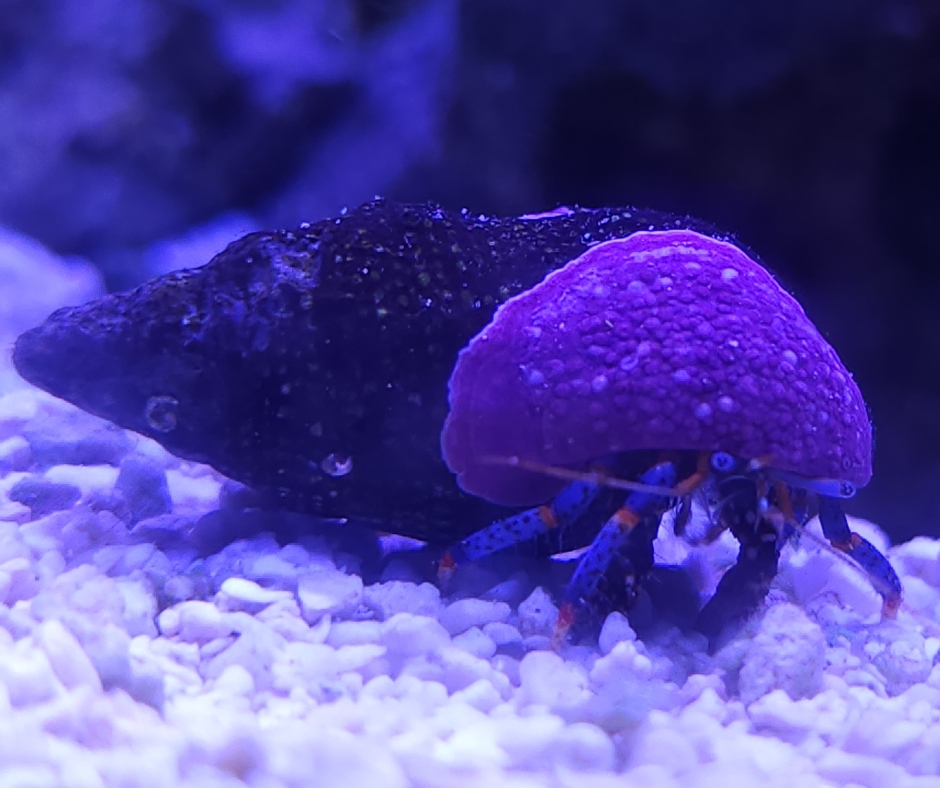
Blue legs, red legs, and other reef-safe hermits are excellent “detail cleaners” because they can reach into tight spots that snails can’t.
The trade-off: if you don’t provide enough empty shells, hermits may kill snails for shells.
Tip: Keep a pile of assorted empty shells available (ideally hidden behind rockwork or tucked into low-visibility areas).
9) Urchins (Choose Wisely)
Urchins are some of the most powerful algae eaters you can add, and they mostly focus on rock surfaces.
But: species selection matters a lot.
- Some pincushion-type urchins can scratch acrylic.
- Some long spine urchins have been known to eat certain corals.
- Some Florida rock urchins (often black) can be venomous and deliver a painful sting.
If you have an acrylic tank, stick to safer options like tuxedo-style urchins and avoid anything known to scratch.
10) Tiger Conch (Strawberry Conch)
Tiger/Strawberry Conchs are quirky, awesome sand cleaners. They cruise the top of the sand with a long “snoot” (proboscis), picking up:
- Detritus
- Film algae / micro growth on sand
- General gunk on the substrate
They can grow to 2–3 inches and sometimes disappear for a week or two, then suddenly reappear and get back to work like nothing happened.
They also have visible eyes and can learn to react to you. Some hobbyists even train them to take small foods.
11) Fuzzy Chiton
Fuzzy Chitons are niche, but fascinating. They’re extremely strong when attached to rock and are slow movers. If one flips over, it may not right itself easily, so flip it back onto rock.
A wild fact: Chitons have some of the toughest teeth found in nature, and if they stick to glass they can scratch it. They don’t usually prefer the glass, so most of their work stays on rock.
They leave a very obvious clean path as they graze, stripping rock surfaces down to clean base.
Recommendation: keep one or two in a mixed reef. This would be more for the “cool factor” and occasional algae control than as your main workforce.
12) Pitho Crab (Pithos / Mithrax-type)
Pitho Crabs have become one of my favorite additions recently. They’re in the mithrax family (like emerald crabs) and are especially known for one thing:
Bubble algae destruction.
If bubble algae is taking hold, adding a couple Pitho Crabs can make a noticeable difference over a few weeks.
They also pick at other nuisance algae (hair/turf types).
Pro tip: Many reefers prefer female mithrax-type crabs because they tend to stay more focused on grazing. (Sexing involves differences in the underside “apron” plate. I recommend looking up before you buy.)
How Many Cleanup Crew Animals Do You Actually Need?
You’ve probably heard “one per gallon.” It’s easy to repeat, but it’s not a real rule. Stocking depends heavily on:
- Fish load (bioload)
- Feeding levels
- How far into the ugly phase you are
- How much algae/detritus is present right now
A Better Strategy: Build It Over Time
Once your tank is cycled and the ugly phase begins, start adding cleanup crew gradually:
- Add 4–6 animals per trip to the store
- Go weekly or every other week
- Mix species so you cover all zones (sand surface, sand underlayer, rock, glass, crevices)
What you don’t want to do is dump in a massive army of one species (like 200 of the same snail) all at once. You’ll overwhelm the tank’s available food and many will starve.
My Favorite “Reality Check” Rule
When your tank is in the ugly phase, look at the display:
If you can look at any area of the tank and there isn’t a cleaner within a couple inches of that spot, you probably don’t have enough cleanup crew yet.
A lightly stocked tank with only a couple fish can run far fewer cleaners than a heavily stocked system with 15–20 fish. Adjust based on what your tank is producing.
Quick Cleanup Crew Zone Cheat Sheet
- Sand surface: Tiger Conch
- Under the sand / scavenging: Nassarius (Tongan or Vibex depending on tank size)
- Glass + rock grazers: Trochus, Ceriths, Nerites, Turbos
- Tight crevices: Hermits, Dwarf Ceriths
- Heavy algae pressure: Urchins, Turbos, Trochus
- Bubble algae: Pitho Crabs
 Reef Rookies - Respectful Reef Keeping
Leave a comment